
Hello

My Study Abroad Experience: Photeine Lambridis

Where and when did you study abroad?

I studied
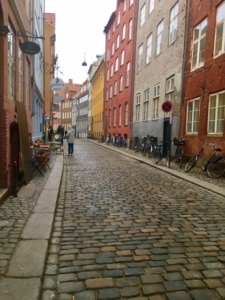
abroad at Copenhagen Business School in Copenhagen, Denmark during my spring semester of my junior year (Spring 2017).

What are two things you learned from your time abroad that you may not have learned otherwise?

One important thing I learned while studying abroad was how to embrace the culture that I’m living in, despite it being different from my own. The Danish people and culture are beautiful and I think it’s important to embrace all of these differences. For example, the Danish people tend to be very reserved and quiet. There isn’t much conversation on the public transportation, in stores, or walking down the street. But this doesn’t mean that they won’t talk to you if you need help. It’s just their way of respecting your privacy. The Danes also bike everywhere in all types of weather so one way of embracing the culture is to buy a bike to travel around the city. Biking in a busy city was completely out of my comfort zone but doing so was well worth it!

Another important thing I learned during my time abroad was how to be independent. There were only four other BU students who attended CBS during my semester. So I essentially traveled by myself to a country I’ve never been to. But I think that this challenge made me a stronger and more capable individual. I took advantage of some of the opportunities to socialize early on in the semester and make friends as a result. I learned how to navigate large European cities and plan trips with these new friends. I also became comfortable with being by myself. Sitting in parks listening to music was one of my favorite things to do (Copenhagen has so many beautiful parks!). Coming back to BU, I now feel more open to new experiences and more confident in my ability to take on future challenges.

What surprised you most about your ti    me abroad?

What surprised me the most was how quickly I fell in love with Copenhagen, despite it being so different from other cities I’ve lived in or traveled to. Even though I felt a little uncomfortable the first few weeks (especially navigating the supermarkets), I quickly grew out of the early stages of being a tourist and into the feeling of being a true Copenhagen resident. Even though I’m not Danish, Denmark and the Danes will always feel like a part of me and I look forward to visiting in the future!

What was the hardest part of your experience?

The hardest part of my experience was prioritizing my studies while also taking advantage of all that Copenhagen and Europe have to offer. The academics at CBS are very different from BU and Questrom. Your grade in each class is entirely based on the final exam, which can be scary. But they do give you sufficient time to study and prepare. Attendance isn’t required so it can be easy to postpone studying until before the exams. However, if you devote time for your schoolwork each week and attend class like you would at BU, you should still be successful. It’s also very rewarding to know that you were able to balance your studies while still being able to explore and go on amazing adventures!

What was the best part of your experience?

By far the best part of my experience were the friends that I made. I was fortunate to make friends early in the semester. Because of how international the CBS exchange program was, my closest friends weren’t from the US. As a result, exploring Copenhagen and traveling to other parts of Europe with these friends made it all the more exciting!

What are the best tips for those planning to study where you did?

My best tip is to try becoming friends or strike up a conversation with Danish students! Take advantage of the minimal language barrier since they all speak English very well. It can be easy to only become friends with other exchange students and travel with them. However, you learn so much about the Danish people by interacting with them! They’re very friendly and they have a crazy sense of humor! I met my Danish friends through participating in the Buddy Program where they pair you with a CBS student, so I recommend participating in that program.

Are there any hidden gems that your classmates should check out?

One of my favorite spots in Copenhagen is called Islands Brygge. You can sit along the water and have a picnic when the weather is nice. I would also recommend eating at some of the street food markets in Copenhagen. My favorite is Paper Island. There’s a huge selection of food and it’s a relatively inexpensive way to eat out in the city. Also walk into any bakery and try the pastries because they are absolutely delicious!

My Study Abroad Experience: Kennia Garcia

Where and when did you study abroad/off-campus?

I studied abroad in Padua, Italy, during my Spring Semester 2017.
What did you do for your internship and what kinds of projects were you assigned (if you had one)?

I interned at Sinedi S.r.l., a management consulting firm. The company focuses on strategy and organizational structure, decision support systems, private equity, and executive education. During my internship, I reclassified financial statements, prepared abstracts of potential clients that included a description of the company and its products, supported business intelligence projects, gathered research on venture capitalists in the Veneto region, and performed marketing-related functions.

What are two things you learned from your time abroad/off-campus that you may not have learned otherwise?

I took Italian language classes in high school and during my freshman year of college. While I did learn Italian grammar and vocabulary, I lacked an understanding of common phrases and cultural norms specific to different regions. My host family, Italian professors, peers, and work colleagues taught me Italian expressions not written into textbooks. In addition to expanding my understanding of the Italian language, I became familiar with Italian cultural norms, especially customs related to food. Little things such as not ordering a cappuccino after 10am, referring to coffee as ‘caffè’ and not ‘espresso’, eating dinner very late in the day, and eating an entire pizza by yourself were all things I learned that show whether or not you truly understand Italian culture.

Second, I learned about cultural differences in business. Business etiquette is different all around the world and in an increasingly interconnected world, it’s important to exhibit courtesy and respect. In the United States, showing up early means you are on time, being on time means you are late, and running late is unacceptable. I sat in on various meetings with company executives and rarely did they start on time. Oftentimes, business meetings are interrupted by caffè breaks and conversation about family. Adjusting to unfamiliar tendencies may feel wrong, but in the end, it is very necessary and ultimately results in a successful business deal.

What surprised you most about your time abroad/off-campus?

I was surprised by how much I learned about myself, the country in which I was living, and about travel. Being in unfamiliar places brought out the best in me. I was comfortable making mistakes because I grew from them. Without those temporary moments of embarrassment, I wouldn’t have had as many laughs or stories to tell. My language skills improved drastically in a short amount of time after being totally immersed in an Italian environment. Finally, I was surprised by how quickly I learned how to book flights, trains, and accommodations. Traveling throughout Italy and all of Europe became somewhat easy and that’s something I wasn’t expecting.

What was the hardest part of your experience?

I encountered challenges when I took classes at the University of Padua. Questrom is very different than the Department of Economics and Management at the University of Padua in many ways including classroom layouts, professor and student relationships, study spaces, and course expectations. At Questrom, I have worked on multiple team assignments with students from different parts of the world. We have been challenged to work in a team-oriented mindset and to complement each other’s strengths. Most of the students in my classes had never worked in a team or written a research paper collectively in a small group. I felt frustrated at times because our standards of quality work differed greatly. Questrom provides team rooms and other study spaces to get work done, but I struggled with finding an enjoyable study spot. Boston University has different resources and I think it was difficult to adjust to those offered at UNIPD.

What was the best part of your experience?

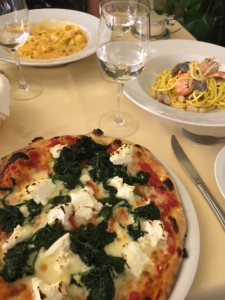
 I absolutely loved the food. The entire practice of eating an Italian meal is remarkable. The idea of eating an antipasto, which is a starter, followed by a primo and a secondo with a contorno, a side dish, and ending with a sweet dolce is quite an experience. Fresh ingredients and seasonal produce make for a delectable meal. Italy thrives on small family-owned restaurants which treat restaurant patrons like family. Not only was the food delicious, but the atmosphere created by the owners was very pleasant.

What are your best tips for those planning to study where you did?

I recommend getting familiar with basic Italian words and phrases. There are many opportunities to practice and expand your language skills, especially if you will be traveling. While most people in large cities and in Northern Italy speak English, it’s nice and much appreciated if you can communicate in Italian. Since you will be living with a host family, be respectful of their space as well as yours. Try to share some of your own culture as much as they share theirs with you because there’s beauty in mutual cultural exchanges. Finally, learn how to appreciate your own company. This program is one of the longer ones offered by Questrom. There will be times in which you find yourself alone and yearning for your friends and family’s company, but take this time to do a lot of self-reflection and enjoy the things you can’t get back home. Walk around, practice your Italian, eat lots of bread and cheese, and get lost every once in a while.

Are there any hidden gems that your classmates should check out?

Forno Zogno has delicious piadine and it’s right by the Prato, Dalla Zita has cheap sandwiches and over 60 combinations, daPrette is a counter that sells panzerotti, La Romana has some of the best gelato in Padova, and the Coffee Box has awesome mugs, great wifi, and a taste of home if you ever miss the states. If you’re into running or simply want to go on a nice walk, jog along the river. Last, many people don’t know this, but students can get into the botanical garden for free and even do work there because they have wifi!

My Study Abroad Experience: Neelu Mohaghegh