We are pleased to announce our first in-person workshop this fall! On Friday October 7, 2022 we will bring together industry leaders and academic researchers to discuss how we can make corporate carbon targets more effective in reducing carbon emissions.
Blog
-
IMAP Fall 2021 Newsletter

IMAP Fall 2021 Newsletter

A Message from the Executive Director
Dear Friends and Colleagues of the IMAP,
I am proud to share many updates in this first newsletter of Boston University’s Impact Measurement and Allocation Program (IMAP). We now have several projects underway!
The IMAP seeks to improve the quality and coverage of ESG data available to investors. We are not seeking to develop a single score, but rather improve many ESG indicators so that individual values may be applied to a more transparent set of investment options. By working in collaboration with industry leaders, we will ensure the results of our academic research are connected to changes in practice. Our conversations with professionals in the investment industry thus far have highlighted two areas of priority for the IMAP: carbon-emissions reporting and human capital.
Currently, we have projects underway addressing the following questions:
- More and more companies are declaring net-zero or carbon-reduction targets for their future. How can investors determine which carbon targets are at risk?
- Are today’s ESG disclosures consistent with SASB recommendations?
- How do ESG ratings influence the judgements and decisions of various stakeholders?
- Is more regulation required to appropriately incorporate climate risk in asset pricing?
I look forward to sharing the results of these projects with you as they become available. In the meantime, I hope you find value in the below recent publications of our affiliated faculty.
Finally, for those who I have not yet met, I joined BU in January as the IMAP’s first Executive Director. I am an engineer who spent the last twelve years in the Boston office of a German environmental sustainability software and consulting firm. Most recently, I was their North American Director of Consulting and Innovation. I am excited to now leverage my deep knowledge of Life Cycle Assessment and how corporate and product carbon footprints are calculated to address the ESG challenges of the financial industry. I hope to meet you on zoom or at one of our upcoming events.
Sincerely,
Susan Fredholm Murphy
Recent Publications by IMAP Affiliated Faculty
Caroline Flammer, Michael W. Toffel, & Kala Viswanathan’s:
Shareholder activism and Firms’ Voluntary Disclosure of Climate Change Risks
finds that in the absence of mandated disclosure requirements, shareholder activism can elicit greater disclosure of firms’ exposure to climate change risks. Furthermore, environmental shareholder activism increases the voluntary disclosure of climate change risks, especially if initiated by institutional investors, and even more so if initiated by long-term institutional investors. Companies that voluntarily disclosed climate change risks following environmental shareholder activism achieved a higher valuation post disclosure, suggesting that investors value transparency with respect to firms’ exposure to climate change risks.Madison Condon’s
Market Myopia’s Climate Bubble
explains how inaccurate and incomplete incorporation of climate change-related risks into asset pricing exists at the level of individual assets.Kenneth Pucker’s
The Trillion Dollar Fantasy: Linking ESG Investment with Planetary Impact
tries to size the ESG market and assess claims of alpha and impact. It ultimately concludes that alpha remains unproven, impact is mostly an afterthought, and the rationale for much of the asset management industry is rooted in self interest. While impact investing is laudable and the fast growth of Climatetech (venture capital to drive planetary solutions) is really encouraging…addressing E and S challenges requires government action to reset the rules.Andrew A. King and Kenneth P. Pucker’s
Heroic Accounting
explains the problems with the idea of trying to create a single dollar-value measure of a firms net goodness. They find this approach impossible to implement accurately and perilous to try.Upcoming Events

Monthly Lunch Seminars:
The IMAP will begin hosting a monthly lunch seminar in order to build and strengthen our community of affiliated faculty, students and industry professionals. The sessions will be held in-person in the Questrom School of Business at BU. Vaccinated individuals within the Boston-area are welcome to join us for lunch in-person. Masks are required indoors within all BU facilities unless actively eating or drinking. Socially-distant seating will be provided in the room in order to allow participants to eat during the presentation.A zoom option will be available for those interested but unable to attend in-person. In order to facilitate frank conversations between participants, the Q&A of these sessions will not be recorded. If interested in joining, please email Susan Murphy at sfmurphy@bu.edu for more details.
Webinars:
We will also host more formal webinars open to a larger audience. Stay tuned for more information on those in a future newsletter. In the meantime, you may be interested in some of these PRI academic webinars hosted by our own Caroline Flammer.About the IMAP
Boston University’s Impact Measurement and Allocation Program was founded thanks to generous donations to the University by those who want to see improvements in the ESG data made available to financial investors. We are a joint venture of the Questrom Business School’s Susilo Institute for Ethics in the Global Economy and the university-wide Institute for Sustainable Energy. Our ties to both of these Institutes allow us to leverage interdisciplinary teams to solve current business challenges.
We are furthermore aided in our mission to produce impactful research via our Advisory Board of industry leaders. To contribute to our program, or learn more about it, please email sfmurphy@bu.edu
Learn More Copyright (C) 2021 Boston University. All rights reserved.
Want to change how you receive these emails?
You can update your preferences or unsubscribe -
Climate Change & Responsible Investing: The Opportunities
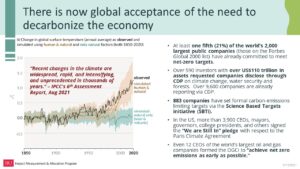
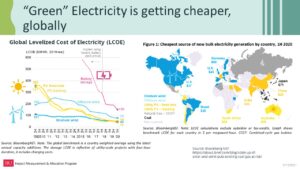
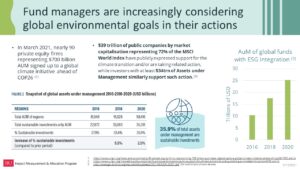
Last week, the trustees of Boston University decided to divest the university endowment from fossil fuels. As part of their deliberations, Peter Fox-Penner, Director of the IMAP, shared the following short presentation about the size and growth of sustainable investing.
2021-09-15_IMAP_for_Trustees



-
Financial Materiality of ESG Metrics
Recently, a congressman asked us to help explain how Environmental, Social and Governance (ESG) metrics can be financially material to a company’s performance. We turned to our network of industry professionals for their favorite resources and have compiled them on our website here. We will continue to update this page over time with new resources as they become available.
We thank our friends at Calvert Research and Management, FCLTGlobal, Nordea Asset Management, Russell Investments, Vert Asset Management, and Boston University for sharing their favorite content.
-
The IMAP Responds to SEC Request for Comment on Climate Change Disclosures
The IMAP recently responded to the Security and Exchange Commission’s request for comment on climate change disclosures. Read our response here.
-
June 17 – Improving Sustainable Investing through Better ESG Metrics

June 17, 2021 | 11 a.m. – 12:30 p.m.
Businesses and investors are increasingly including environmental, social, and governance (ESG) performance attributes alongside traditional financial metrics. Although ESG metrics are becoming increasingly popular, there are many data gaps, and limited consistency within what is available today.
The Boston University Impact Measurement and Allocation Program (IMAP) was established in 2020 to improve and standardize the measurement and use of ESG attributes of businesses. We are working closely with both leading financial industry professionals and a wide network of academic experts.
IMAP’s early work has identified a strong desire from the investment industry for new sources of high-quality ESG metrics, that are not readily available from today’s data vendors. This webinar will highlight new metrics of corporate performance under development by leading academic researchers. Each will present different data sources that can be used to improve the risk assessment of a firm’s performance. While most of today’s ESG metrics are currently derived from a company’s self-reported measures, this webinar will explore potential third-party sources such as GIS data, temperature trends, worker accident reports, and employee ratings of their employers.
Recording (June 17, 2021)
Event Resources
- Sucharita Gopal, Professor in Boston University’s Department of Earth & Environment, College of Arts & Sciences.
Suchi is a Professor in Boston University’s Department of Earth & Environment, College of Arts & Sciences who wants to transform science into policy and action. Her research is multidisciplinary, dealing with spatial analysis and modeling, GIS, data mining and information visualization, and artificial neural networks. She has applied spatial analysis and modeling to address a variety of problems in ecology, sustainability, public health, and business. She has also worked on uncertainty issues related to GIS. She has used neural networks for pattern classification, estimation, and mixture modeling. Her current funded research includes the development of ESG analytics, AI (a SaaS platform) to guide sustainable investment, sustainable development goals (SDGs), marine conservation and planning, opioid risk mapping, network analysis of gas leaks, biodiversity impacts of energy investments, and mapping health service delivery in Kenya. - Nina Mažar, Professor of Marketing, Boston University’s Questrom School of Business.
Nani is a Professor of Marketing in Boston University’s Questrom School of Business. In her current role as co-director of the Susilo Institute for Ethics in the Global Economy she focuses on topics ranging from ethics of technology, customers, and organizations to social & environmental impact. Her current work includes an analysis of perceptions of corporations based on the availability of employee satisfaction ratings and ethical conduct ratings published by third party platforms. She previously helped establish the World Bank’s Behavioral Insights Initiative (eMBeD) to use behavioral science to make development interventions more effective and co-directed the Behavioral Economics in Action research center at Rotman (BEAR) – the first academic center in Canada dedicated to applying behavioral economics to policy and organizations.
- Nora M.C. Pankratz, Postdoctoral Research Fellow at the University of California Los Angeles Center for Innovation.
Nora is a postdoctoral research fellow at the University of California Los Angeles Luskin Center for Innovation. She is interested in how investors, firms, and workers respond to changing environments and her research focuses on the potential effects of Climate Change on Firms and Financial Markets in this context. In December 2021, she will join the research department (Directorate General Research) of the European Central Bank as a Senior Economist.
Moderator
- Susan Fredholm Murphy, Executive Director, Boston University’s Impact Measurement and Allocation Program (IMAP).
Susan is the Executive Director for Boston University’s Impact Measurement and Allocation Program (IMAP). Prior to joining BU, she spent 12 years in the field of environmental sustainability consulting for corporations, most recently as the North American Director of Consulting and Innovation for thinkstep AG. Her expertise is in the field of Life Cycle Assessment, generating the data used to calculate corporate scope 1, 2 and 3 carbon impacts. She holds a MS in Technology and Policy from MIT and a BS in Mechanical Engineering from Olin College.
Co-hosted by the Boston University Impact Measurement & Allocation Program (IMAP), Susilo Institute for Ethics in the Global Economy at the Questrom School of Business, and the Institute for Sustainable Energy.
Event sponsored by the Boston University Questrom School of Business.
Series Sponsor

- Sucharita Gopal, Professor in Boston University’s Department of Earth & Environment, College of Arts & Sciences.