Hello

Entrepreneurship Development Institute of India – Week 5
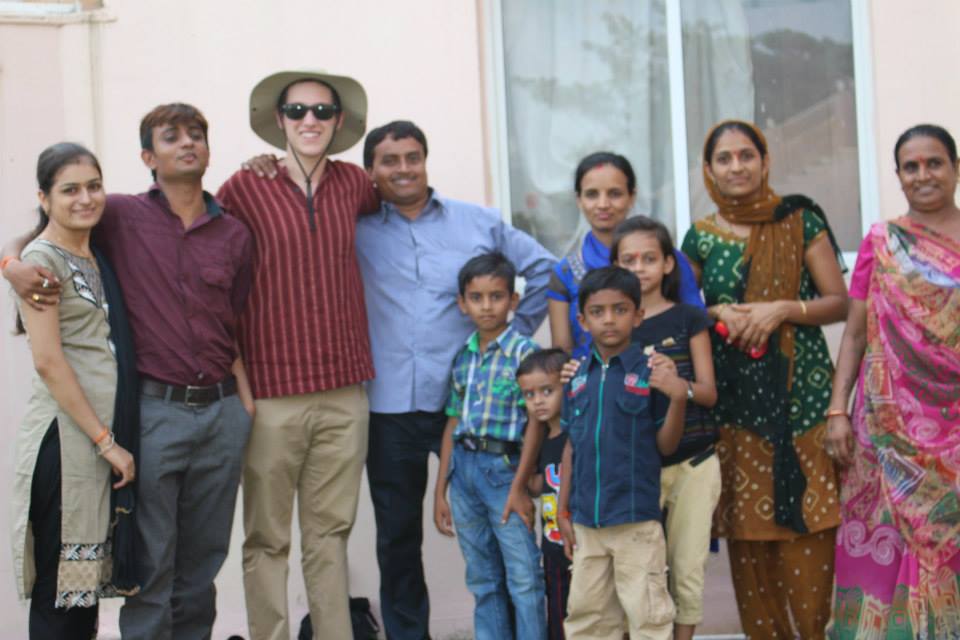
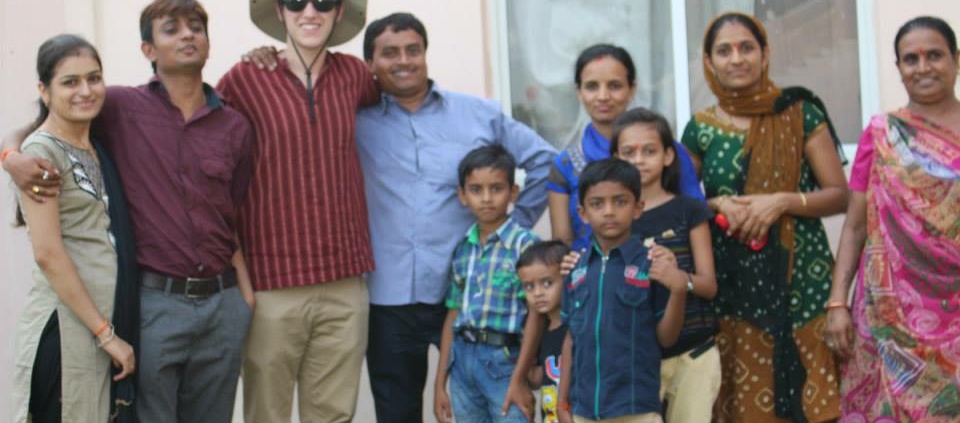
George and friendsTime flies when you’re having fun, or when you’re visiting twenty-two small scale industrial facilities, interviewing their owners, drawing conclusions, and proposing solutions for their problems.

About two weeks ago, my partner, Tony Marinov, and I returned to Baroda to conduct our research assignment. Before departing, we designed a nearly fifty-question, thorough questionnaire attempting to analyse all the issues surrounding access to finance and employment within the Makarpura Industrial Cluster. While our un-air-conditioned, barbed-wire enclosed office space was not a luxurious accommodation during our time in the field, this time we were expecting it.

Even though I’ve spent over a month in India so far, I did not feel like I had truly lived here until my time in Baroda. Our first visit to the city was too abbreviated to really gain our bearings. With a more extensive second visit, Tony and I were able to fully immerse ourselves as locals. We made friends with our neighbours, played soccer with the village children every night, ate at the local markets, hell, we even organized for milk to be delivered to the office every morning!

Every day we got a rickshaw to and from association driven by a man named Ravi. While he knew very little English, Ravi immediately became very close to us. He told our interpreter at one point that he did not think of Tony and us as “customers,” but rather as “close friends.” A fifteen minute rickshaw ride everyday would turn into an hour of hanging out with Ravi’s fellow Tuk Tuk drivers, stopping for Chai on the way home, and taking loads of photos. I began to realize just how important photos are to the culture of India. Ravi didn’t have a phone or computer to receive the pictures, so we sent them to his brother just so he could look at them. Our last day in Baroda happened to be Ravi’s birthday, so Tony and I took him out to a hotel for a birthday lunch. He was incredibly appreciative. Even back at EDI, he still calls from time to time just to check in and practice his English.

In terms of the actual work, we could not have asked for a better sample of Industrial Units. While there were a striking amount of similarities between companies, it was their differences that strengthened our research, and supported our proposals. Tomorrow, we give our final report to a panel of professors and EDI staff. After compiling our near 40-page report, coming up with (hopefully) helpful proposals, I could not be prouder of the work we’ve done.

As a group we’ve continued to explore Gujarat and beyond. From our delightful weekend in the lake city of Udaipur, Rajisthan, to the hectic streets and markets of Ahmedabad, I firmly believe that there is no better way to really get to see India than working here. We are not on vacation, but rather forced into daily Indian life, even if that means sometimes stepping out of our comfort zone. Had our group not been open-minded or adventurous, we would never had observed the beautiful ritual of call to prayer in a mosque. We would never have tried some of the best food I’ve tasted. Sure, I might not have spent so much time in the bathroom, but I’ll leave India knowing that I took full advantage of everything this country has to offer.

With just a few days left working at EDI, Chris, Justin, Joe and I are gearing up for our big cross-country trip to Mumbai, Jaipur, Agra and New Delhi. At times I’ve been desperate for western customs, and it sure hasn’t been smooth sailing, but with only two weeks in India left, I’m coming closer to admitting that I might actually miss this place.

George Stern, GEO EDI intern

Reserve Bank of India Reflections: Week 5

As we reflect on five weeks spent in India, a number of emotions are evoked. Many of these emotions we have touched upon in the previous installments, and I fear it would not do to dwell on these. It is, however, coming towards the time when some among us look to the west, and the impending journey back to our respective homelands to be with our kin. Alas, such thoughts should be pushed to the back of one’s mind, a flicker in the darkness, for we have time enough. Time enough to laugh, time enough to love.

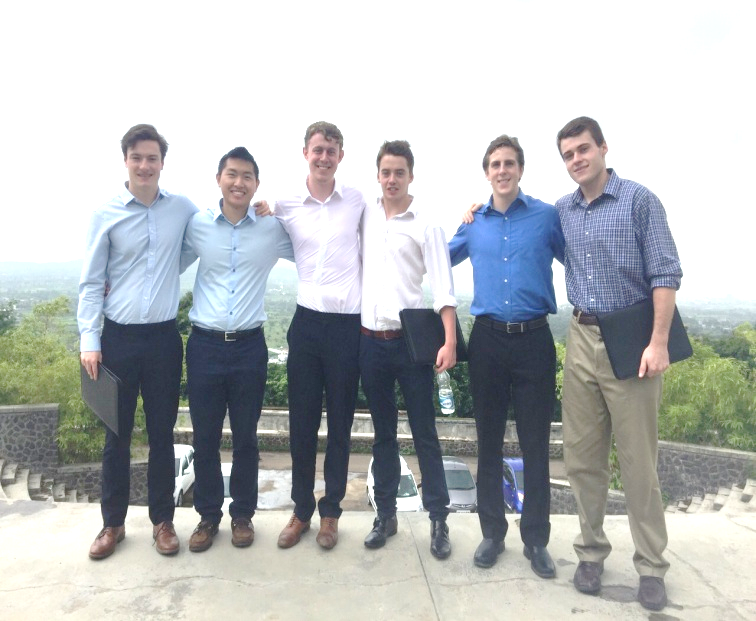
group-photo“I can see the Shire. The Brandywine River. Bag End. Gandalf’s fireworks, the lights, the party tree’’. (Tolkien, 1955)

The euphoria of finishing work on Friday was directed, in typical fashion, towards Koregaon park for a night of turpitude. There was however one notable absence, that being your humble narrator, who the gods had seen fit to incapacitate with a fever. Nevertheless, the gallant survivors soldiered on. Uniting with friends both old and new, a great night was had by all, but for one exception. As it turned out, the night proved very much to be a tale of two cities, for a second among us found the euphoria he was searching for ‘it was the best of times, it was the worst of times’. The following morning started early for those in a fit state to travel. A short number of miles away lay the Symbiosis Institute, a glorious campus set back in the hills, unsullied by the spread of urbanisation. After a number of fascinating conferences and a sumptuous feast, the day was done, and the weary travellers returned home.

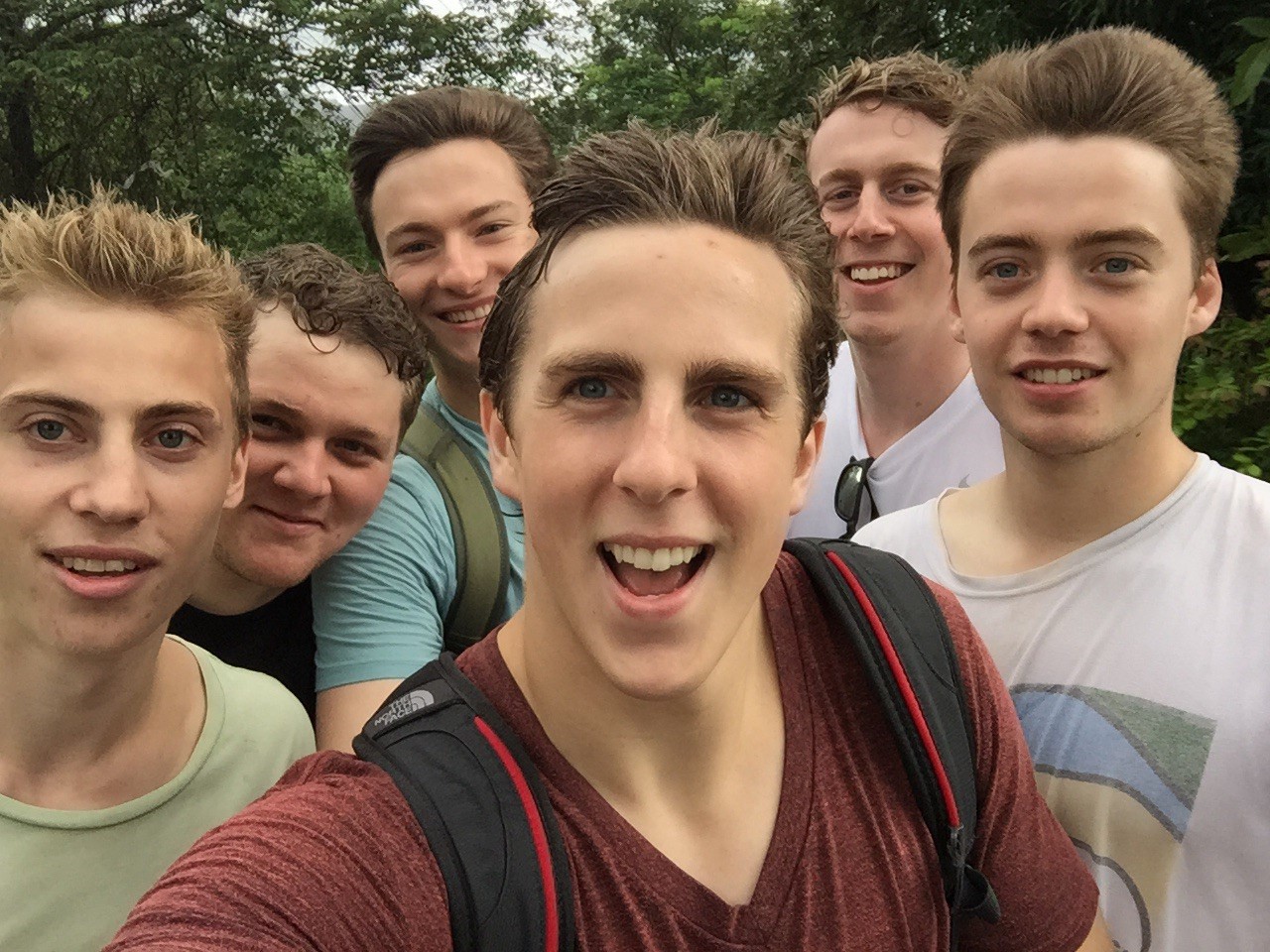
The next day, awaken by a burning desire for adventure and a relatively clean bill of health amongst the group, we departed for Lonavala, a hill station nestled between Pune and Mumbai. Having purchased a return train ticket for Rs 30 (or 30 pence to you and me), we seated ourselves in the cramped compartment and trundled down the tracks, the light patter of rain accompanying us for the duration. Upon our arrival, we were met with a daunting 12km to reach the famous Lohgarh Fort, situated precariously on the precipice of a sheer face. En route we passed a number of caves and waterfalls, each presenting an opportunity to breathe in our immense surroundings. After weaving our way up the changing path, we finally reached the bottom of an exposed set of stairs, made treacherous by the deluge that was now falling from the heavens. By the time we reached the higher sections, the stability of the rock beneath us had given way to a torrent of water, threatening at any point to sweep us to swift demise on the jagged rocks below. We pressed on, however, our spirits buoyed by the raucous chanting of our Indian counterparts ‘Jai Bhavani, Jai Shivaji’ they sang, as far as we could understand, paying homage to the once King of Maharashta who had occupied the fort. Upon reaching the summit, we stood victorious. I fear the expression soaked to our skins would not sufficiently describe our condition. For many of us, the suspicion was that we had in fact absorbed water, the monsoon actually permeating into our very souls.

pic2Needless to say, the prospect of the return journey to the station did not fill us with any particular relish, and as such we found a willing driver, who (this being India) allowed us to ride standing up in the back of his pick-up truck down the undulating mountain roads. This proved a source of much hilarity for those who were still making the climb, many finding themselves unable to contain their glee. The chanting continued for the entirety of our journey ‘Jai Bhavani, Jai Shivaji, Jai Bhavani, Jai Shivaji’ following us down the mountainside.

That evening, having returned home, we found ourselves deserving of a hearty meal and decided to venture to the Hard Rock Cafe. Hoping against hope that this would be the night that we would find the dark meat that our stomachs so craved. Our prayers were answered, and each bite of the tender, juicy, succulent burger was all we could have dreamed of. The work week continued as it is inclined to do so, broken up only by a trip to Mumbai to see various offices of the Reserve Bank. We were able to ‘interact’ with several important members of the banking world and learned a lot about the stability of the economy and the process of the destruction of money.

Epilogue: On our inability to encapsulate our surroundings and the ferocity of the monsoon.

For we are but simple men with simple words, and for such things we must look to those who possess the necessary verbal proficiency, lest we pass up the chance to embody our experience through the written word. On this occasion, it is through paraphrasing Coleridge that one might best project our intentions, ‘Where oft the sacred river ran, through caverns measureless to man’. For here the artistry of the words flows as do the rains down the luscious green valleys. And one need look no further for an estimation of scale, for ‘measureless’ embodies all that is India. The majesty of the landscape that greeted us at the summit was matched only by its vastness.

For ‘measureless’ was the queue of well wishers, waiting for an introduction. As were the miles covered by foot and by wheel. ‘Measureless’ was the deluge that did cover our brow, that weighted our garments, and did steel our determination. Is not the power of the monsoon measureless? Does is not giveth and taketh away? A force beyond measure, its fingers reaching across the horizon; arteries breathing life into a barren land.

But in our reverence, prey that we forget not its apathy to the plight of man, for one can hope alone to avoid its wrath. Its appetite for destruction stretches indefinitely, its roots of malice stretch deep. But measureless are the bonds that join us. Sacred and immortalised ‘we few, we happy few, we band of brothers’. (Shakespeare, 1599)


 GEO RBI interns

Jillian Lau, Shanghai Internship

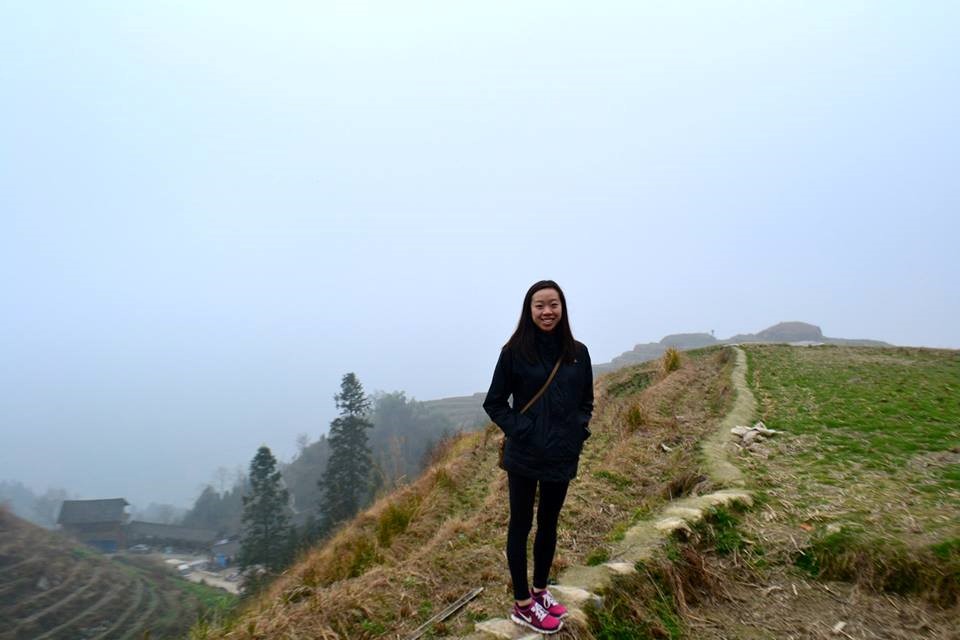
Jillian 4Hello! My name is Jillian Lau and I studied abroad in Shanghai, China spring 2015, the second semester of my junior year.

Internship: I did the Shanghai Internship Program while abroad and interned at a local social media marketing agency called Mailman Group. The agency is owned by an Australian man, and the office is made up of half locals and half foreigners. The office is quite small as there were about 50 employees. Because I was working at a small agency, I had a lot of responsibilities. Some tasks included writing original articles for the company’s two blogs, managing its Twitter accounts, and creating weekly internal newsletters for one of the company’s teams.

I learned: Shanghai is what you make of it. I thought that just being in China I would get that authentic China experience. That was not the case. It’s really easy to get by speaking all English or only frequenting Westernized restaurants and malls. The China experience doesn’t just come to you just because you’re living there, but it’s something you work for if you want it. If you want that authentic China experience, I would encourage you to try to speak Chinese as much as you can, interact with locals, and visit cities and villages off the beaten path.

I was surprised by: How close I became with my Chinese teacher. Everyone who studies abroad in Shanghai is required to take a Chinese language course. The class is every day for 1.5 hours four days out of the week. The classes tend to be small as Shanghai is one of the smaller programs and everyone is usually at a different Chinese level. Even though my Chinese teacher was my teacher, we became friends really quickly. We would go to the gym together, go out to eat, and even explore the city together. Meeting my Chinese teacher was one of the highlights of my study abroad experience, and I’m sure many of the other students who have studied abroad in Shanghai would agree.

The hardest part: Commuting to the office. Shanghai is a huge city. When you’re abroad in Shanghai, you study at Fudan University (the third best university in China or the best university in Shanghai). Most students have their internships in the city center; however, Fudan is about a 45 minute to an hour subway ride into the city center. Not only is the commute long, during rush hour the subways are packed full of people. Also, just to get to and from the subway from the dorms, you have to walk 20 minutes, bike it, or take a bus or cab. The commute alone could leave you exhausted for the day.

The best part: The food and the traveling. Food in China is very cheap and very good. At night, there are street vendors that come out and park outside the dorms. Some of my favorite things to eat while I was there were ròu jīa mó (肉夹馍), a bun stuffed with braised pork belly, má là tàng (麻辣烫), your choice of meat, vegetables, and noodles cooked to order in a spicy broth, and xiǎo lóng bāo (小笼包), steamed soup dumplings. You just have to be careful of what you eat because food is not always the cleanest. Also, China is a great place to travel. There are so many interesting cities within China that are easily accessible by bullet train or plane, or you could also visit neighboring Asian countries.

My tips: Be prepared – not only mentally but physically. It’s always good to mentally prepare yourself any time you’re going to a foreign country with a different culture just so you’re not overwhelmed when you get there. However, there are also precautions that you should take before leaving. These include medicine, toiletries, banking, and clothes. In China, it’s hard to find certain Western comforts that we’re used to so it’s better to be prepared and bring your preferred medicine (such as cold and flu, pain relievers, stomach, etc.) and toiletries (I’m talking to the ladies when I say this). Also, there are many banks and ATMs in Shanghai, but before you leave it’s best to check out what kinds of international services or charges your bank has. I was able to find a Chinese bank that partnered with my local bank, so I didn’t have to pay ATM fees while I was abroad. I also signed up for an international credit card which was great for buying train and plane tickets. Lastly, pack wisely. Shanghai can be pretty cold in the winter then get hot and humid really fast.

Hidden Gems: Definitely check out the South Bund Fabric Market if you want to get some clothes made. Bargain hard!